

Description
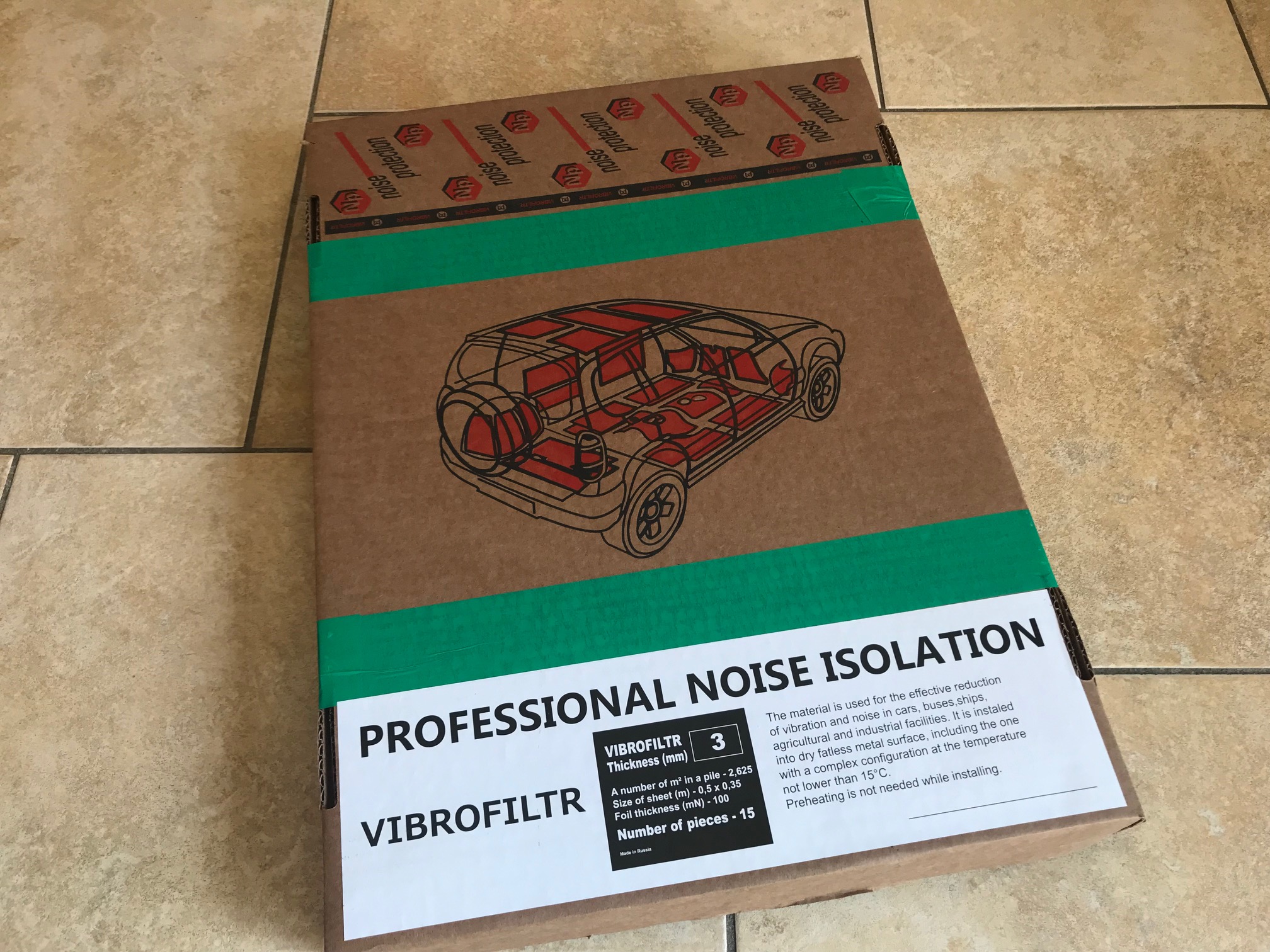
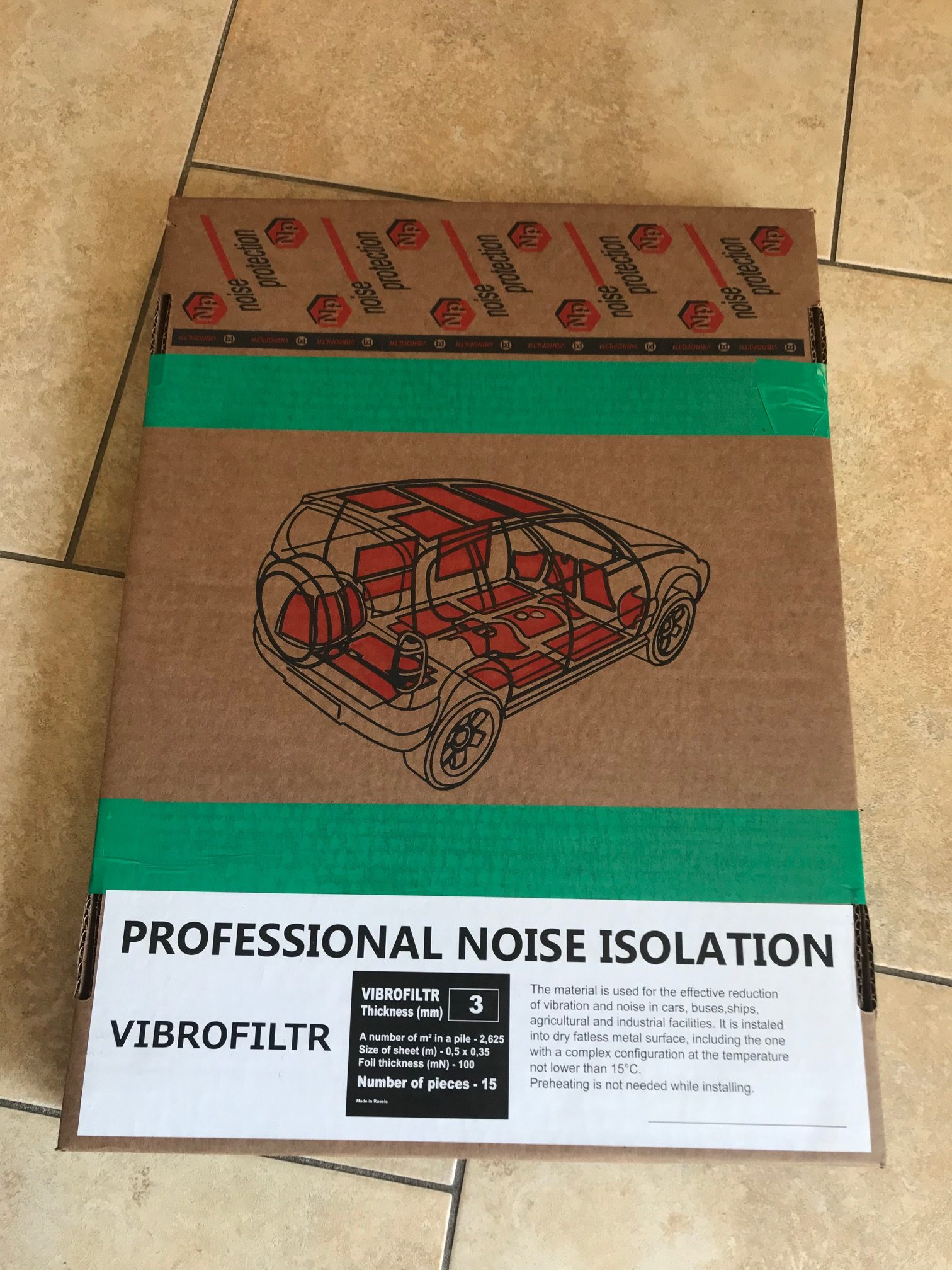
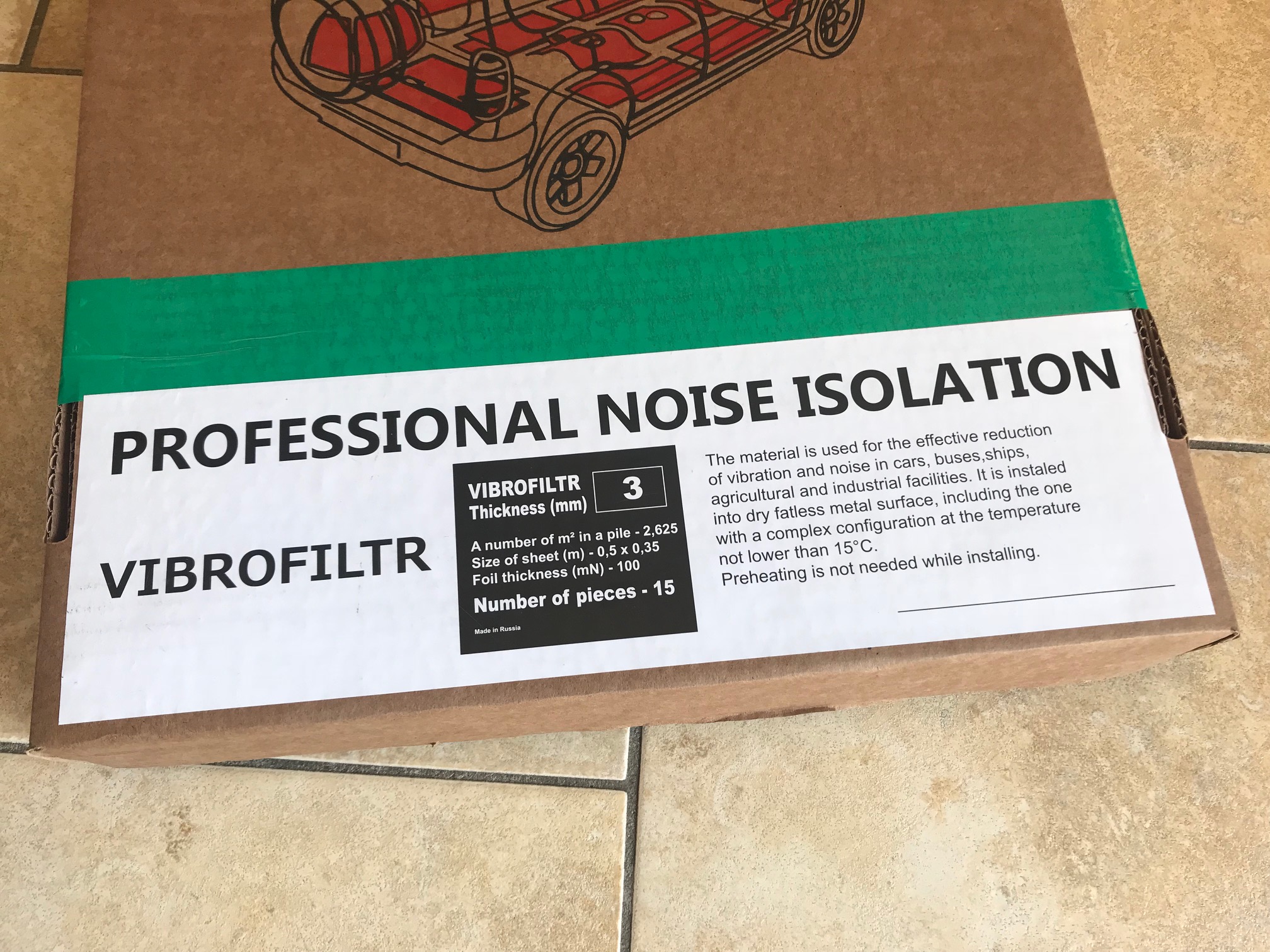
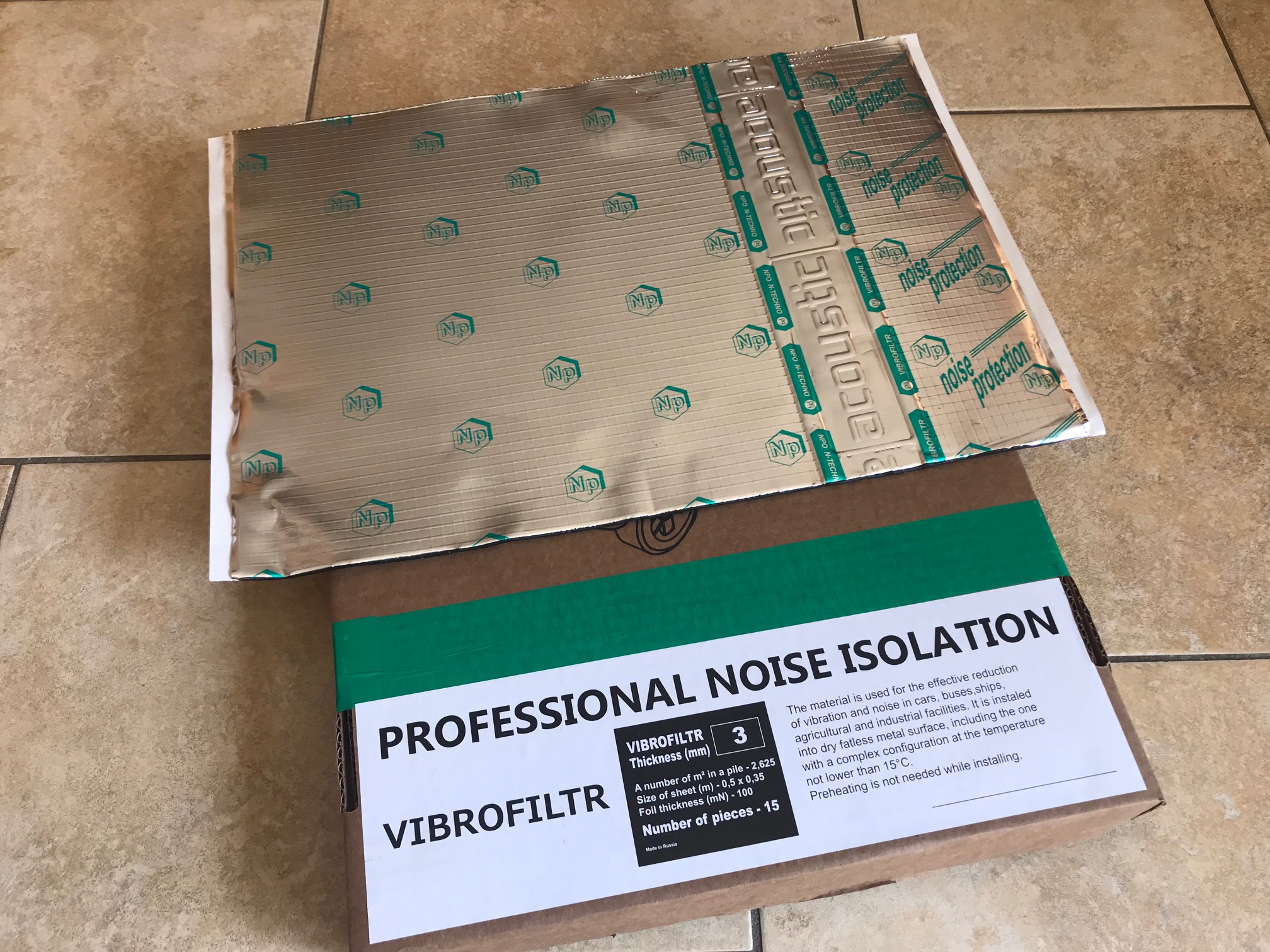
VIBROFILTR Sound Deadening Mats 3 mm 350 X 500 mm (Box of 15)
Number of sheets in a collective packaging: 15 pcs. / 2.62 m2
Vibrofiltr 3.0
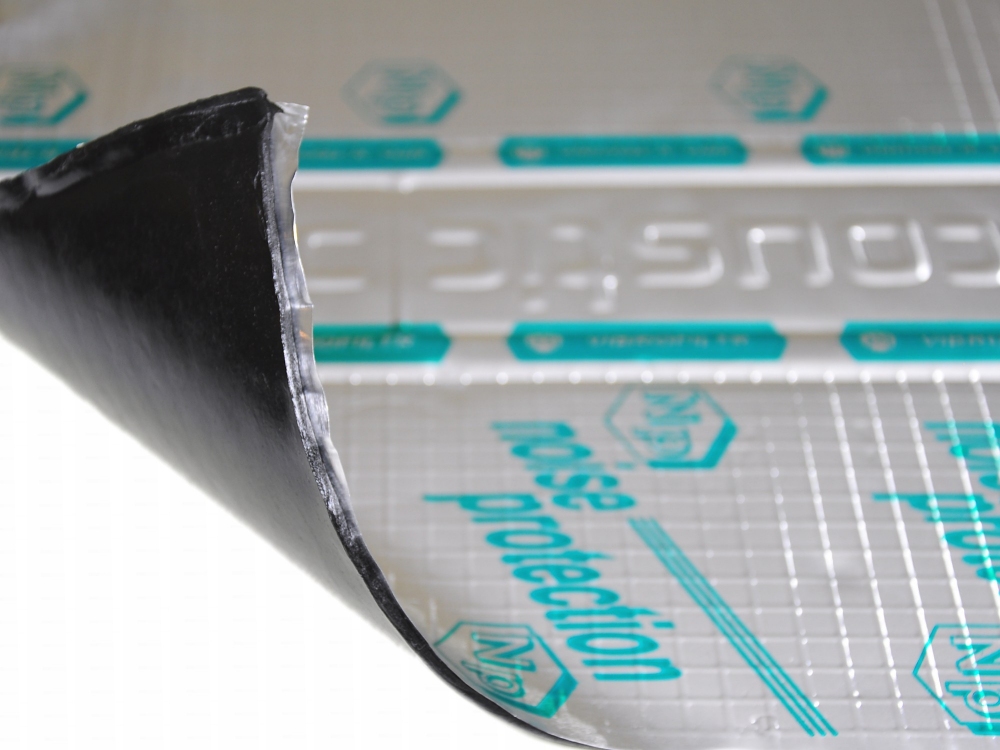
Self-adhesive professional anti-vibration mat for damping vibrations, noise and resonance of acoustic elements of car body and upholstery, yachts, machines and industrial equipment, computer equipment enclosures, RTV or home appliances – price per collective package: 15 sheets with dimensions of 350×500 mm (2,625 m2), thickness of the mat 3.0 mm, thickness of aluminum foil 100 micrometres (0.1 mm).
Vibrofiltr 3.0 in terms of quality and efficiency in relation to price, is the best damping material of the Vibrofiltr NP series (Noise Protection). This product has a very high mechanical loss factor (0.50), which makes it much more effective in operation than most similar products from other companies with the same thickness. These mats are a must-have item when performing high-quality silencing installations, heavier machines, industrial equipment or when installing high-class car audio equipment. Due to the greater weight, it is recommended to use this material on body elements that are most susceptible to vibrations or noise transmission (eg lower part of the body, floor, wheel arches, luggage compartment, engine compartment baffle, etc.).
BASIC PARAMETERS:
self-adhesive mat for damping vibrations, noise and acoustic resonances
material: composite based on high-quality butyl rubber (butyl rubber) and polymers reinforced with aluminum foil
sheet thickness: 3.0 mm +/- 0.2 mm
thickness of aluminum foil: 0.1 mm (100 μm)
dimensions of 1 sheet: 350×500 mm
area of 1 sheet: 0.175 m2
quantity in a package: 15 sheets / 2,625 m2
Weight: 13.89 kg / opk. (5.29 kg / m2)
MLF (mechanical loss coefficient) – vibration suppression efficiency (more = better): 0.50
recommended installation temperature: above + 18ºC
temperature range of use and operation: -50ºC to + 160ºC
strength of material binding to the surface of the metal: not less than 6 N / cm2
high flexibility and high efficiency in a wide range of temperatures
the stability of the viscous butyl polymer layer with a temperature effect of + 90 ° C in 24 hours: delamination and creep do not occur
high adhesion to the substrate with a maximum achieved after a dozen or so to several dozen hours after sticking (depending on the temperature), self-vulcanization
product with anti-corrosion and sealing properties, waterproof, does not contain bitumen additives (without tar and asphalt)
product non-toxic, non-staining, does not emit unpleasant odors, can be used in the automotive industry and indoors
visual special features: green print, embossed text “acoustic”
produced in Russia by ,, NPO National Technology “using the technology and equipment of the German company” Baumuller ”
use in the car: lower body elements most susceptible to noise transmission (eg floor, wheel arches, engine compartment baffle), doors
EFFECTIVENESS OF MUTING
When silencing the car, the desired effect is achieved by sound insulation of its interior and, above all, by significantly reducing (damping) the mechanical amplitude of metal vibrations and plastic elements of the car body and cab. For this purpose, elastic and slightly elastic materials (eg rubber butyl based) are applied to the damped elements, in the structure of which there are large losses of mechanical energy caused by internal friction. As a result, the vibration energy is absorbed by the damping material and converted into heat in it. The ability of a given material to absorb energy of mechanical vibrations depends on many factors, including, but not limited to its design, chemical composition, weight, thickness, etc. It determines the mechanical loss factor (MLF), which is one of the most important parameters, what one should pay attention to when selecting materials that reduce vibrations. This factor is expressed in numbers in the range of 0.00 – 1.00 for a given frequency and temperature (the higher the MLF value, the higher the material’s ability to damp vibrations). To noticeably reduce noise and vibrations inside the vehicle, select materials with the highest possible mechanical loss factor. When attenuating car body elements, the weight of the damping material is as low as possible, which often does not go hand in hand with the highest attenuation efficiency. It is therefore necessary to look for the best compromise between the high value of the mechanical loss factor (MLF) with a simultaneously low weight of the material and an adequate price for it. In the car audio industry, when damping car doors in which loudspeakers will operate, it is practiced to “close” the factory technological holes by covering them with a damping mat (creating a sealed speaker chamber). In these places, mats with a high MLF coefficient, moderate weight and having a thicker aluminum foil (100um or more), which provides higher stiffness and surface stability over the sealed technological holes, works best in these places.


